
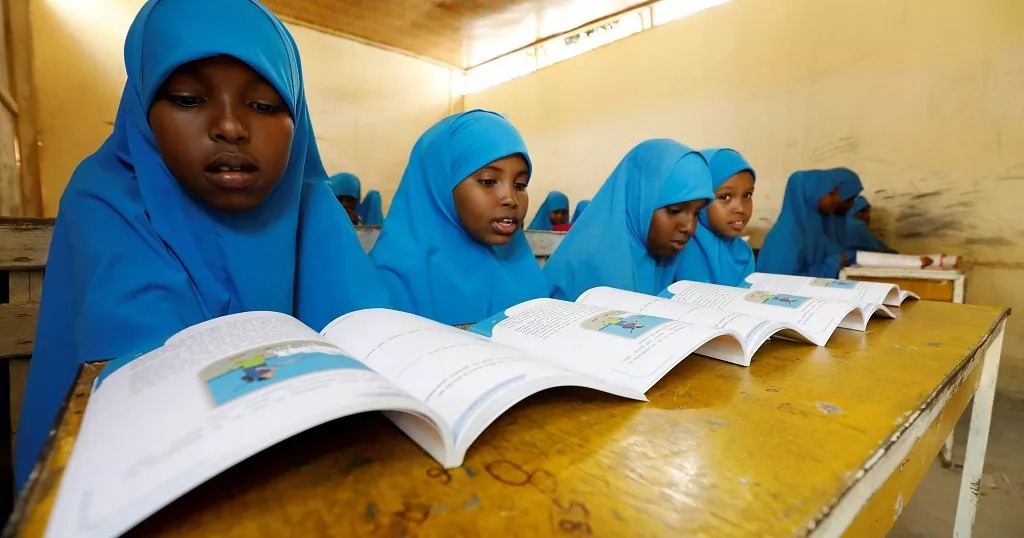
Somalia will introduce Swahili — the lingua franca of East Africa — into its national education curriculum, President Hassan Sheikh Mohamud announced on Friday, marking a significant step in the country’s efforts to strengthen regional ties.
Speaking at a summit of the East African Community (EAC) in Mogadishu, Mohamud said Swahili will be taught in schools and universities nationwide, joining English and Arabic as a core language of instruction.
“The country’s universities, especially the Somali National University, should focus more on developing the Swahili language, which is the language of East Africa,” President Mohamud said. “Adopting Swahili is important for our integration into the region.”
Somalia officially joined the eight-member EAC last year, a move aimed at boosting economic cooperation and development after decades of civil conflict.
Education Minister Farah Sheikh Abdulkadir said the government hopes Swahili will eventually become a language of communication, trade, and learning across the nation.
“We want to see Swahili become a language of communication, trade and learning — even replacing English during our next conference,” he told delegates.
Swahili is already spoken along Somalia’s southern coast, and its use has expanded over the past three decades amid migration and regional exchanges spurred by the civil war and ongoing security challenges.
Analysts say the policy could deepen Somalia’s economic and cultural integration with its East African neighbors while promoting cross-border trade and diplomacy.
